 by
by Bollywood press conferences are often remembered for glamorous appearances, film announcements, playful banter, and headline-worthy moments. But every once in a while, an exchange emerges that sparks a larger conversation—not about films, but about the culture surrounding celebrity interviews themselves.
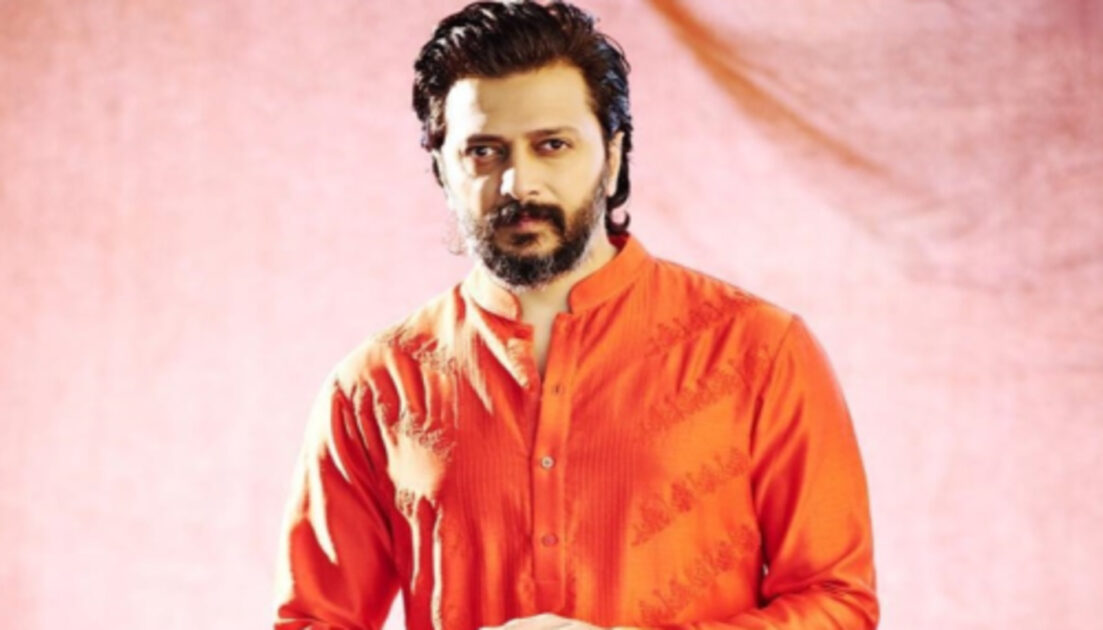
That is precisely what happened when Riteish Deshmukh found himself responding to a media question during a recent press interaction connected to discussions around Lock Upp 2.
What could have become another sensational entertainment clip instead transformed into a moment that many viewers interpreted as a subtle lesson in boundaries, media conduct, and responsible questioning.
When asked whether he would invite Salman Khan and Sanjay Dutt onto Lock Upp 2 in a context that appeared designed to provoke controversy, Riteish did not simply answer the question. Instead, he reportedly responded with a calm but pointed remark that translated into something close to: “If I answer your question, I…”
The incomplete sentence became more powerful than a long explanation.
Because sometimes what remains unsaid becomes the actual message.
Another reason this moment resonated online is because audiences today are becoming more selective about the kind of celebrity interactions they support. Viewers no longer automatically celebrate uncomfortable or sensational questions simply because they generate headlines. There is growing appreciation for interviews that reveal personality, creativity, and perspective instead of attempting to manufacture controversy. Riteish Deshmukh’s response appeared to reflect that evolving expectation. Rather than turning the moment into a viral confrontation, he redirected attention with restraint and composure. In doing so, he demonstrated that professionalism can sometimes create a stronger impact than dramatic reactions.
The Context Behind the Question
Celebrity interviews today operate in a very different environment than they did even ten years ago.
Entertainment journalism has increasingly become dependent on virality.
Questions are no longer designed only to reveal artistic processes or upcoming projects—they are often designed to generate clips, reactions, and social media debates.
Shows like Lock Upp naturally intensify this tendency.
Reality formats thrive on unpredictability. Contestants are expected to reveal secrets, confront public narratives, and engage with dramatic situations that attract viewership.
As a result, questions around such formats frequently shift away from creativity and toward controversy.
Within this environment, bringing high-profile names into hypothetical situations becomes an easy strategy for attention.
But there is also a growing pushback.
Actors today are increasingly selective about what conversations they encourage publicly.
Riteish’s reaction seemed to reflect that shift.
Rather than entertaining speculation or using famous names to build excitement, he appeared to reject the premise itself.
Why Riteish Deshmukh’s Response Stood Out
Riteish Deshmukh has built a public image that differs from the stereotypical Bollywood star persona.
Across comedy, drama, regional cinema, production ventures, and hosting appearances, he has generally maintained a reputation for staying measured in public conversations.
That is why this interaction gained attention.
People were not reacting because he shouted.
They reacted because he did not.
There is a particular type of celebrity response that audiences increasingly appreciate today: controlled refusal.
Not aggression.
Not outrage.
Just boundaries.
By refusing to feed a potentially uncomfortable narrative involving other actors, the exchange created an unexpected contrast with the usual expectation that celebrities should always produce viral soundbites.
In many ways, his response communicated:
Not every question deserves amplification.
Lock Upp 2 and the Curiosity Around Celebrity Participation
Reality shows survive on one thing more than anything else—curiosity.
Viewers constantly ask:
Who will appear?
Who will reveal secrets?
Who will confront whom?
Who will create the biggest moment?
Because of that culture, hypothetical guest appearances become regular discussion material.
But there is a difference between asking whether a celebrity would fit a format and using real personalities as vehicles for controversy.
Shows centered around confession, exposure, and conflict often blur those lines.
When names like Salman Khan and Sanjay Dutt enter those discussions, public interest naturally multiplies.
Both actors carry decades of cinematic influence, strong fan communities, and extensive media attention.
Questions involving them automatically become larger than the event itself.
That may explain why Riteish chose caution.
Any casual answer could immediately become a headline detached from original context.
The Modern Celebrity Interview Problem
There is an invisible pressure during entertainment interviews.
Reporters want exclusives.
Celebrities want control.
Audiences want authenticity.
Algorithms want drama.
These goals rarely align.
As a result, interview culture has become increasingly performative.
Questions become more provocative.
Responses become more guarded.
The result is often a strange cycle:
A dramatic question gets asked.
A celebrity refuses.
The refusal itself becomes news.
Ironically, that is exactly what happened here.
But there is another layer.
Public figures today understand how quickly statements travel.
One half-joking answer can become:
“Actor confirms…”
“Star reacts…”
“Celebrity hints…”
Context disappears.
This makes restraint more valuable than spontaneity.
Salman Khan and Sanjay Dutt: Why Their Names Carry Extra Weight
There are certain names in Bollywood that automatically change the energy of a room.
Salman Khan and Sanjay Dutt belong to that category.
Their careers stretch across generations.
Their public images include blockbuster success, loyalty narratives, reinventions, controversies, and cultural influence.
Mentioning either actor instantly shifts attention.
Mentioning both together creates an even larger reaction.
That is why hypothetical questions involving them rarely stay hypothetical.
They become interpreted.
Fans analyse tone.
Media extracts meaning.
Social platforms build narratives.
A casual comment can evolve into days of discussion.
Someone experienced in the industry would know this.
Riteish’s response suggested awareness of exactly that dynamic.
The Rise of Boundary-Setting Celebrities
There has been a noticeable shift in how public figures handle interviews.
Earlier generations often felt pressure to answer everything.
Today’s celebrities are increasingly comfortable saying:
I don’t want to discuss that.
That isn’t relevant.
That question isn’t appropriate.
And audiences are not always punishing them for it.
In fact, many people respect boundaries more than performative openness.
This trend reflects broader cultural changes.
People increasingly understand:
Access is not entitlement.
Being famous does not automatically mean someone must participate in every speculative conversation.
Riteish’s moment fits into that larger transition.
Entertainment Journalism vs Entertainment Content
One reason moments like this become popular is because audiences themselves are becoming more aware of media incentives.
Viewers can often tell when a question seeks information versus when it seeks reaction.
Traditional entertainment journalism asks:
How was the role developed?
What inspired the project?
What challenges shaped production?
Content-driven questioning asks:
Who annoyed you?
What do you think of this controversy?
Would you expose someone?
The second format often performs better online.
But better metrics do not always create better conversations.
The Riteish exchange reminded audiences that refusing sensational framing can itself become meaningful.
Social Media and the Demand for Instant Opinions
Celebrity culture today rewards immediacy.
People expect reactions instantly.
A trailer releases.
Opinion.
A controversy trends.
Opinion.
A rumour spreads.
Opinion.
But not responding is also a response.
Riteish’s handling suggested something increasingly rare:
You do not need to participate in every narrative offered to you.
That message extends beyond celebrities.
It reflects a broader communication principle.
Not every question deserves an answer.
Not every discussion deserves escalation.
The Power of Saying Less
There is an old communication idea:
Short statements often survive longer than detailed explanations.
A complete rebuttal can be dissected.
A measured pause becomes harder to manipulate.
That is partly why the line gained attention.
People projected meaning into it.
Some saw professionalism.
Some saw diplomacy.
Some saw quiet criticism of media tactics.
Whatever interpretation viewers preferred, the moment succeeded because it avoided spectacle.
In an industry often rewarded for excess, restraint became memorable.
Why Audiences Related to the Moment
Part of the reaction may come from something universal.
Most people have experienced situations where someone asks a question that feels unnecessary, uncomfortable, or designed to create conflict.
The challenge is responding without becoming rude.
That balancing act is difficult.
Public figures experience that pressure on camera.
Viewers experience it in daily life.
Watching someone redirect rather than react can feel unexpectedly satisfying.
It becomes less about celebrity and more about communication.
What This Means for Lock Upp 2 Conversations
Reality television already carries enough anticipation.
Contestant speculation.
Host expectations.
Format comparisons.
Audience predictions.
The conversation does not necessarily need additional controversy to remain interesting.
If anything, moments like this may encourage future promotional interactions to focus more on storytelling and less on forced conflict.
That would not eliminate dramatic headlines.
But it could create healthier engagement.
Final Thoughts
The most interesting part of this incident was not whether Salman Khan or Sanjay Dutt would ever appear on Lock Upp 2.
It was what happened before that hypothetical could even begin.
Riteish Deshmukh turned attention away from celebrity speculation and toward the question itself.
That shift mattered.
Because increasingly, audiences are not only evaluating answers.
They are evaluating the quality of questions.
In a media environment driven by reactions, perhaps the strongest response is knowing when not to give one.
And in that sense, the press conference moment became bigger than entertainment news.
It became a reminder that public conversations still benefit from discretion, context, and respect—even in an industry built on visibility.