 by
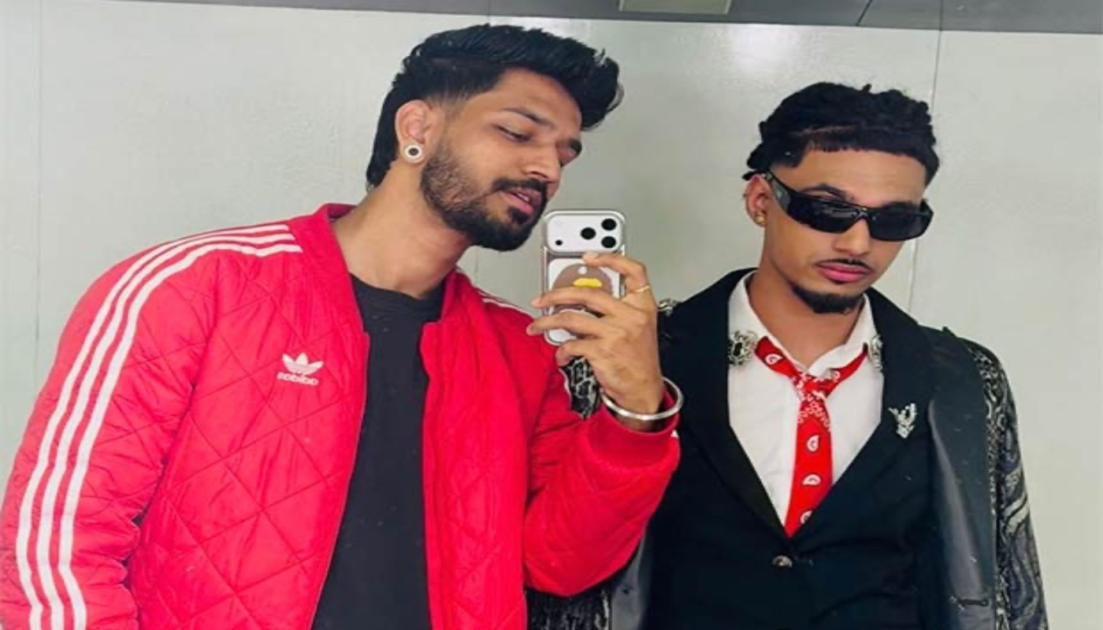
by Bigg Boss 20 contestant Yung DSA has found himself at the centre of a growing online discussion over his accent, slang and manner of speaking, with old interview clips becoming the latest source of debate around his personality inside the reality show. What began as social-media commentary has now developed into a conversation about whether changing the way one communicates in different environments should automatically be interpreted as being inauthentic.
Yung’s brother Pranay has now addressed the criticism, defending the rapper and arguing that his different communication styles reflect his ability to understand his surroundings rather than an attempt to pretend to be someone else. His central point was straightforward: professionalism and authenticity are not mutually exclusive.
“Being professional doesn’t mean being fake,” Pranay said in a statement shared on Instagram, explaining that Yung is capable of adjusting his tone depending on whether he is appearing in an interview, participating in a professional setting or interacting inside the Bigg Boss house. (Bollywood Hungama)
The controversy comes at a particularly visible stage of Yung’s Bigg Boss journey. The rapper has already been discussed in connection with his gameplay, his association with other contestants and comparisons with former Bigg Boss winner MC Stan. Now, the attention has shifted towards something as fundamental as the way he speaks.
How Yung DSA’s accent became a talking point
The conversation gained momentum after old videos of Yung speaking during interviews began circulating online. In those clips, viewers saw him communicating fluently in Hindi and English and using a style that some felt sounded different from the slang-heavy tonality he uses inside the Bigg Boss house.
The contrast quickly became a topic of social-media discussion.
Former Bigg Boss contestant Gauahar Khan also commented on the issue after seeing the older videos. She questioned whether Yung’s personality and mannerisms inside the house represented his natural way of communicating or whether some aspects of his slang and tonality were being adopted for the reality-show environment. (The Times of India)
Gauahar’s comments added another layer to the discussion because Bigg Boss contestants are constantly watched, analysed and compared. Every change in behaviour can become material for viewers trying to determine what is spontaneous and what may be part of a contestant’s strategy.
That distinction, however, is not always easy to make.
A person can communicate differently with a journalist, a colleague, a family member, close friends and strangers without necessarily becoming a different person. Language itself is often shaped by the people around us, the environment we are in and the expectations attached to a particular situation.
That is precisely the argument Pranay has now put forward in Yung’s defence.
Yung’s brother says both sides of his personality are real
According to Pranay, Yung understands how to adapt his communication to different environments. He pointed out that the rapper is fluent in both Hindi and English and said that interviews, panels and professional spaces naturally call for a different tone from the one he uses in the Bigg Boss house.
Inside the show, Pranay argued, Yung is presenting a more raw version of himself, including the slang, tonality and experiences associated with his background and environment.
“Both versions are real,” was essentially the heart of Pranay’s argument. He maintained that Yung does not need to imitate another artist and that knowing how to “read the room” should not be confused with faking a personality. (Bollywood Hungama)
His response also addressed criticism surrounding Yung’s education and communication skills. Pranay stressed that being educated and being connected to a particular slang or cultural environment are not contradictory.
The statement has therefore moved the conversation beyond a simple question of whether Yung sounds different on camera. It raises a larger issue: can a person have multiple authentic ways of expressing themselves?
Professional communication does not necessarily erase individuality
One of the most interesting aspects of the debate is the assumption that authenticity must always sound the same.
In everyday life, people routinely modify the way they speak depending on where they are. Someone may use formal language during a job interview and completely different expressions while talking to childhood friends. A person who speaks English fluently may switch to Hindi with family. Someone may use industry terminology at work but return to regional slang outside the workplace.
None of those changes necessarily mean that the person is pretending.
This phenomenon is often described through the broader concept of code-switching, where speakers move between languages, dialects, accents, vocabulary or communication styles depending on the social context.
For multilingual societies such as India, this is particularly common. Hindi-English conversations can change dramatically depending on whether the speaker is at home, at work, on television or among friends. Regional accents and slang can similarly become more or less prominent according to the setting.
Yung’s brother appears to be placing the rapper’s behaviour within that broader reality.
His argument is not that viewers should ignore what they see on Bigg Boss. Instead, it is that a difference in communication style should not automatically become proof of deception.
Bigg Boss naturally amplifies questions about authenticity
Reality television creates a complicated relationship between authenticity and performance.
Contestants enter the Bigg Boss house knowing that cameras are recording their interactions continuously. They are removed from their ordinary routines and placed among people they did not necessarily choose to live with. Their conversations become entertainment, their disagreements become episodes and their personalities become subjects of public discussion.
Under those circumstances, behaviour can naturally become more intense.
The environment itself is different from everyday life.
A contestant who might normally resolve a disagreement privately may react differently when surrounded by cameras and other contestants. Someone who is usually quiet may become more vocal. Someone who is socially reserved may become expressive. A person may also consciously decide how much of their personal identity they want to reveal.
That makes the question of what is “real” particularly complicated.
Yung’s situation demonstrates this perfectly. His older interviews show one communication style, while his Bigg Boss interactions show another. For some viewers, the contrast may suggest performance. For his brother, it demonstrates adaptability.
Both observations begin with the same basic fact: Yung communicates differently in different environments.
The interpretation of that difference is where the disagreement begins.
The MC Stan comparison adds another dimension
Yung has also faced comparisons with rapper MC Stan, who became one of the most recognisable rappers associated with Bigg Boss after winning the show in Season 16.
The comparison has emerged partly because both artists have brought a street-influenced rap identity, slang and a particular urban cultural vocabulary into the Bigg Boss environment.
During an earlier Bigg Boss episode, Yung was asked about people saying that he was copying MC Stan. The discussion itself became part of his journey on the show. (ABP News)
Such comparisons can be difficult for contestants because reality television encourages viewers to search for familiar personalities. Once an audience associates a contestant with a previous housemate, similarities in language, fashion, behaviour or background can become amplified.
However, a shared cultural vocabulary does not necessarily establish imitation.
Rap itself has developed through regional languages, street slang, personal storytelling and distinctive forms of delivery. Artists can occupy overlapping cultural spaces while still having individual identities.
Pranay’s defence of Yung appears to reject the idea that the rapper needs to borrow someone else’s personality to make an impact.
Why accents become so emotionally charged
Accents are rarely just about pronunciation.
They can carry associations of geography, class, education, community, profession and social identity. As a result, people often attach assumptions to the way another person speaks.
A formal accent may be interpreted as educated or professional. A regional accent may be viewed as more familiar or grounded. Slang may communicate belonging to a particular social group.
Those interpretations, however, are cultural perceptions rather than objective measures of intelligence, authenticity or worth.
That is why the discussion surrounding Yung has become bigger than a question of pronunciation.
When viewers compare two versions of a person’s speech, they are also comparing the identities they associate with those styles. One may sound more formal while another sounds more casual. One may appear more suited to an interview while another may feel more natural in a group of friends.
But communication styles can coexist within the same person.
The role of old videos in modern reality-TV debates
Social media has transformed the way reality-show contestants are perceived.
In the past, audiences largely reacted to what was broadcast during a season. Today, almost every contestant enters the public eye with a digital archive behind them. Old interviews, Instagram posts, performances and clips can resurface within minutes.
That creates an unusual situation.
A contestant is no longer judged solely on their current behaviour. Viewers can compare their present-day personality with content recorded years earlier, often in completely different circumstances.
Yung’s older interviews became important precisely because they gave viewers a point of comparison. But a comparison is not automatically an explanation.
A person may change over time. They may become more comfortable with a particular identity. They may consciously alter their communication style. They may speak differently depending on the interviewer. Or several of those factors may exist simultaneously.
Without knowing the circumstances surrounding each interaction, viewers can observe the difference but cannot necessarily establish the reason for it.
That distinction is important in any discussion surrounding authenticity.
Salman Khan’s Weekend Ka Vaar feedback
The accent conversation has also unfolded alongside criticism of Yung’s gameplay.
During the latest Weekend Ka Vaar episode, host Salman Khan addressed Yung and suggested that he appeared to be a misfit within his current group and that his association with that group could be affecting his individual game.
Yung accepted the feedback and responded, “It was a mistake bhai, aage se nahi hoga,” indicating that he would attempt to avoid repeating the mistake. (Bollywood Hungama)
The timing is significant because it means Yung is currently being examined from multiple angles.
Viewers are not only discussing how he speaks but also how he behaves, whom he associates with and how he positions himself within the larger dynamics of the house.
That is typical of Bigg Boss, where personal identity and gameplay often become inseparable in the public conversation.
Gauahar Khan’s question reflects a larger reality-TV debate
Gauahar Khan’s involvement is noteworthy because she understands the Bigg Boss environment from personal experience.
Her question was essentially about consistency: if Yung communicates differently in older interviews, what explains the version of him seen inside the house?
It is a legitimate question for viewers to ask when watching a reality programme. At the same time, asking whether a behaviour is authentic is different from establishing that it is fake.
Gauahar’s comments opened the conversation; Pranay’s response supplied a different perspective.
That exchange illustrates how reality television can create competing interpretations of the same behaviour.
One viewer may see a contestant adapting strategically. Another may see the same behaviour as a natural expression of a different side of their personality.
Neither interpretation can be established simply by comparing accents.
“Reading the room” is a social skill
One of the strongest ideas in Pranay’s statement is his reference to Yung being able to understand “where, how and in what tone” to communicate.
That concept is relevant far beyond Bigg Boss.
Professional communication often requires people to understand context. A musician speaking at a panel discussion is likely to communicate differently from the way they speak with friends after a performance. A public figure answering questions from journalists may choose carefully worded responses, while the same person may use slang in an informal conversation.
This ability to adjust does not automatically make the formal version artificial.
In fact, adapting to an audience is a basic part of communication.
The question becomes more complicated only when adaptation is used to create a deliberately misleading identity. Determining that requires evidence about intention, not simply a difference in vocabulary or accent.
In Yung’s case, his brother has explicitly rejected the idea that the rapper is constructing a false identity.
The importance of separating slang from authenticity
Another important aspect of the debate is the perception that slang is somehow less authentic or less educated than formal speech.
Language does not work that way.
Slang develops within communities and can carry cultural meaning that formal vocabulary cannot reproduce. For rappers in particular, rhythm, phrasing, pronunciation and street vocabulary can be central to artistic identity.
Yung’s brother described the rapper’s Bigg Boss communication as connected to his “raw, core self,” including slang, tonality and experiences associated with the environment he comes from. (Bollywood Hungama)
That explanation presents his house persona not as a manufactured character but as a version of himself that is more comfortable in an informal environment.
Whether individual viewers accept that interpretation is ultimately a matter of their own reading of the show. What can be established from the available comments is that Yung’s family sees the difference as contextual rather than deceptive.
Bigg Boss contestants are constantly negotiating identity
Every contestant on Bigg Boss faces some version of the same challenge.
They must be visible without appearing desperate for attention. They must express opinions without alienating everyone around them. They must participate in group dynamics while maintaining an individual identity. They must also decide how much of their outside personality to bring into a highly controlled environment.
For an artist like Yung, that negotiation can be even more complicated.
His public identity already includes music, performance and a particular cultural vocabulary. Entering Bigg Boss introduces another audience that may not be familiar with every part of his background.
The show therefore becomes a space where different aspects of his identity collide.
The accent debate is one consequence of that collision.
What Pranay’s statement adds to the conversation
Pranay’s response provides a family member’s perspective at a moment when social media discussion has become increasingly focused on Yung’s communication style.
His argument rests on three main points.
First, Yung is capable of speaking fluently in both Hindi and English.
Second, he changes his communication style according to the environment, including professional spaces and the Bigg Boss house.
Third, his more informal slang and tonality inside the show should not automatically be interpreted as imitation or fabrication.
He also pushed back against criticism of Yung’s educational background and asked people to distinguish between choosing an appropriate communication style and pretending to be someone else. (The Times of India)
That response does not end the online debate, but it introduces context that was missing from many of the social-media comparisons.
The larger conversation about authenticity
At its heart, the Yung DSA accent controversy raises a question that extends beyond Bigg Boss: what does it actually mean to be authentic?
Does authenticity require a person to speak the same way everywhere?
Does changing one’s tone mean changing one’s identity?
Can a person be equally genuine while speaking formally in one setting and using slang in another?
There is no universal rule that says an authentic personality must have only one communication style.
People are complex, and language is one of the ways that complexity becomes visible.
The Bigg Boss house may simply make that complexity more noticeable because every conversation is observed under unusually intense circumstances.
Yung’s case has therefore become less about whether one accent is “real” and another is “fake” and more about how audiences interpret the relationship between language and identity.
A debate that is likely to continue
As Bigg Boss 20 progresses, Yung DSA’s behaviour will continue to be examined alongside his gameplay. The accent discussion may fade as new controversies emerge, or it may remain part of the larger conversation surrounding his identity on the show.
For now, the most significant development is that his brother has directly responded to the criticism.
Pranay’s message is clear: Yung’s ability to communicate differently in different environments should not, in his view, be treated as evidence that one version of him is artificial. He maintains that the professional rapper seen in interviews and the slang-heavy contestant seen inside the Bigg Boss house can both represent genuine aspects of the same person.
The debate ultimately highlights one of reality television’s oldest questions: how much of what audiences see is performance, and how much is personality?
With Yung DSA, that question has taken the form of an accent.
But beneath the slang, tonality and comparisons lies a much broader discussion about language, social identity and the freedom to communicate differently depending on where one is and who one is speaking to.
As the season continues, viewers will have more opportunities to form their own understanding of Yung’s personality through his actions, conversations and relationships inside the house. For now, however, his brother’s response has added an important counterpoint to the claim that a difference in communication style necessarily means a difference in authenticity.