 by
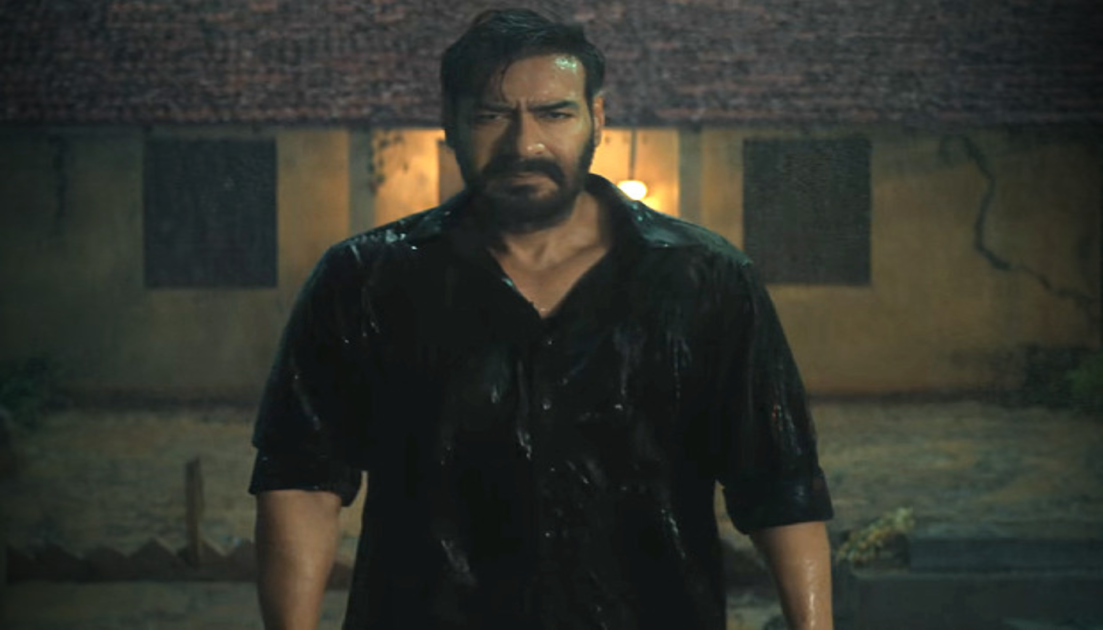
by The Central Board of Film Certification (CBFC) has cleared Drishyam: The Conclusion with a U/A 16+ certificate and, notably, without asking for a single cut or audio-visual modification. The development comes just days after Sidharth Malhotra and Tamannaah Bhatia’s The Vvaan also received a clean certification, making back-to-back no-cut clearances an interesting development in the current Hindi film landscape.
The Abhishek Pathak directorial has also locked a runtime of 150 minutes, or 2 hours and 30 minutes, putting it eight minutes above the reported 142-minute runtime of Drishyam 2. The film is scheduled to arrive in cinemas on October 2, 2026, bringing the Hindi Drishyam franchise to what its director has described as its final chapter.
The certification update is significant for another reason. Drishyam: The Conclusion is only the second Hindi film in the franchise to receive a U/A certificate with zero cuts, following Drishyam 2 in 2022. With a longer runtime and a completely new story rather than a direct adaptation of the Malayalam Drishyam 3, the third Hindi instalment is shaping up to be a substantially different chapter in the Salgaonkar family saga.
Drishyam: The Conclusion
Gets a Clean U/A 16+ Certificate
According to the certification details reported on September 28, the CBFC Examining Committee did not demand any cuts from Drishyam: The Conclusion. It also did not request audio or visual modifications.
That means the film has reached certification without the kind of alterations that can sometimes become part of a movie’s pre-release journey. In this case, the submitted version was approved as it stood.
The certification is U/A 16+, which is also consistent with the film’s mystery-thriller positioning and the more mature material expected from the concluding chapter of a crime-driven family saga. The CBFC’s current certification framework evaluates films according to their overall impact and considers whether content is suitable for particular age groups. The Board’s published guidelines also cover issues including violence, obscenity, drug use, sexual violence, criminal activity and material that may affect public order or other protected interests. (CBFC)
The clean clearance does not, by itself, reveal what happens in the film. Nor does it indicate how intense or dark the final instalment will be. What it does establish is that the certified theatrical version does not contain any cuts or audio-visual changes ordered by the CBFC.
For a franchise built around secrets, evidence, police investigations and a family attempting to stay one step ahead, the timing of this certification update is particularly intriguing.
The film’s actual story remains under wraps.
The Film Will Run for 150 Minutes
The other major piece of information from the certification details is the runtime.
Drishyam: The Conclusion has been certified at 150 minutes, translating to exactly 2 hours and 30 minutes.
That makes the upcoming film eight minutes longer than Drishyam 2, whose announced runtime was 142 minutes. Drishyam 2 was already structured as a fairly substantial thriller, with its story concentrating on the aftermath of the events of the first film and the Salgaonkar family’s continuing struggle to protect itself
The difference is relatively modest in numerical terms, but in a thriller, eight additional minutes can represent a meaningful amount of storytelling space.
A longer runtime can accommodate additional character development, more investigative material, a slower build-up, multiple narrative threads or a more elaborate climax. It does not automatically indicate that a movie contains more action or more twists. Runtime alone cannot establish the quality or pacing of a film.
However, in the case of Drishyam: The Conclusion, the 150-minute duration becomes particularly noteworthy because this is being positioned as the final Hindi chapter of the story.
The filmmakers have more than two hours to bring the Salgaonkar narrative to its intended conclusion.
How the Three Hindi Films Compare in Runtime
The runtime of the Hindi franchise has changed across its three instalments.
The 2015 Drishyam had a runtime of roughly 160 minutes, while Drishyam 2 was officially announced at 142 minutes. The new film, at 150 minutes, sits between the two in terms of duration.
That creates an interesting progression:
- Drishyam (2015): approximately 160 minutes
- Drishyam 2 (2022): 142 minutes
- Drishyam: The Conclusion (2026): 150 minutes
The third film therefore does not return to the length of the original, but it does expand considerably from the second instalment.
The eight-minute increase over Drishyam 2 is also notable because the new film is not simply extending an existing Malayalam storyline. According to director Abhishek Pathak and comments from the film’s team, the Hindi third instalment follows a new story.
That distinction matters.
A New Story, Not a Hindi Adaptation of Malayalam’s
Drishyam 3
For viewers familiar with the Malayalam franchise, one of the biggest questions surrounding the Hindi Drishyam finale has been how closely it would follow Mohanlal’s Drishyam 3.
The answer from the Hindi film’s team has been clear: the stories are different.
Abhishek Pathak has described Drishyam: The Conclusion as a completely new story and confirmed that the Hindi franchise is taking its own route rather than directly adapting the Malayalam third instalment. Ajay Devgn has similarly described the third film as the first instalment in the Hindi franchise with an entirely new script rather than merely making changes to an existing story.
That makes the 150-minute runtime more interesting.
Audiences cannot simply use the Malayalam film as a roadmap for what will happen next to Vijay Salgaonkar and his family. Familiarity with the Malayalam franchise may provide context about the characters and the larger Drishyam concept, but it does not necessarily reveal the plot of the Hindi conclusion.
The filmmakers have effectively created a new mystery for audiences who already know the world.
That is particularly relevant to a franchise where suspense depends heavily on uncertainty.
If viewers already knew every major story beat in advance, the dramatic value of a concluding mystery could be reduced. By creating a different narrative, the Hindi version can preserve the central identity of the franchise while taking its characters into a separate direction.
Vijay Salgaonkar’s Story Reaches Its Final Chapter
At the centre of the Hindi franchise is Vijay Salgaonkar, played by Ajay Devgn.
The character’s defining trait has never simply been physical strength or conventional heroism. Vijay’s power within the story comes from his ability to think ahead, understand people and construct narratives.
The original Drishyam introduced audiences to a family man whose ordinary interests and routines became unexpectedly important when his family found itself caught in a serious crisis.
Drishyam 2 expanded the consequences of that crisis, focusing on what happens when the past refuses to remain buried.
Now, Drishyam: The Conclusion is intended to bring that journey to an end.
Director Abhishek Pathak has confirmed that the Hindi franchise will conclude with the third film rather than continuing into a fourth instalment. The Malayalam series, meanwhile, is following its own path.
That makes the word “Conclusion” more than a promotional subtitle.
It signals an intended endpoint.
For audiences who have followed Vijay, Nandini, Anju and the rest of the family since 2015, the upcoming film represents the final opportunity to see how the Hindi version resolves the long-running narrative.
The Return of Familiar Faces
The third instalment brings back several important members of the Hindi franchise.
Ajay Devgn returns as Vijay Salgaonkar, while Tabu, Shriya Saran, Ishita Dutta and Rajat Kapoor are also part of the returning cast. New additions include Jaideep Ahlawat and Prakash Raj, giving the film fresh performers around its established central characters. (BookMyShow)
The addition of Ahlawat and Prakash Raj is especially relevant because the Drishyam franchise has traditionally used investigative and authority figures to create pressure around Vijay and his family.
The first film established the fundamental conflict.
The second film intensified the consequences.
The third has the opportunity to introduce a new set of challenges while retaining the emotional relationships audiences already recognize.
The presence of established characters alongside new ones also allows the concluding chapter to expand the world without abandoning its original foundation.
Why the Zero-Cut Certification Matters
Film certification and film censorship are often discussed together, although certification is the formal process through which the CBFC assesses a film for public exhibition and assigns an appropriate certificate.
A “zero cuts” clearance simply means the certified version was approved without the Board ordering deletions or modifications.
The CBFC’s own published information says its decisions are guided by objectives that include protecting artistic expression while ensuring that films remain responsible and sensitive to social standards. Its guidelines also state that films are to be considered in their entirety in terms of overall impact. (
Against that framework, a no-cut clearance is noteworthy because the Board has various mechanisms through which it can seek changes when it considers them necessary.
In the case of Drishyam: The Conclusion, however, the reported certification details indicate that none were requested.
Interestingly, the development follows another recent no-cut clearance.
Just days earlier, The Vvaan, starring Sidharth Malhotra and Tamannaah Bhatia, received a U/A 16+ certificate without cuts or audio-visual modifications. Its certified runtime was reported as 136.25 minutes, or 2 hours, 16 minutes and 25 seconds.
The two films are very different in genre and story, but their certification outcomes have created an unusual pattern: two major Hindi releases receiving clean U/A 16+ certification within the same week.
The “No Cuts” Detail Does Not Mean the Film Is Family Viewing
One distinction is important here.
A film receiving a U/A 16+ certificate should not be interpreted as meaning that it is suitable for every age group without consideration.
The current certification category indicates that the film is intended for audiences aged 16 and above, with the certification system distinguishing it from unrestricted categories.
Therefore, the combination of U/A 16+ + zero cuts tells us two separate things.
First, the Board approved the film without requiring deletions or modifications.
Second, the Board classified it under the U/A 16+ category.
The two details should not be treated as interchangeable.
For Drishyam: The Conclusion, the classification is also consistent with the franchise’s crime-thriller territory. But the certification itself does not reveal specific plot twists, deaths, violence levels or individual scenes.
Those details remain for audiences to discover when the film releases.
A Longer Runtime Could Give the Finale More Room
The difference between 142 and 150 minutes may sound small, but eight minutes can make a difference in a suspense film.
A thriller needs to control information.
It has to decide what the audience knows, what the characters know, what investigators discover and when each piece of information is revealed.
That becomes particularly important for Drishyam because the franchise’s storytelling has always revolved around information.
Vijay’s ability to anticipate questions and construct explanations is central to the character. The police investigation, meanwhile, depends on finding inconsistencies in those explanations.
The audience is therefore constantly positioned between two sides.
We know enough to understand Vijay’s situation.
But we do not necessarily know what the investigators will uncover.
A longer final instalment can provide additional space for that tension to develop.
It could allow the screenplay to establish new circumstances before the central conflict becomes clear. It could also give supporting characters more room or provide a longer final act.
At this stage, however, it would be speculative to say exactly how those additional eight minutes are being used.
The only confirmed information is the final runtime.
The Franchise Has Changed Since 2015
The Hindi Drishyam franchise began in 2015 with Nishikant Kamat’s adaptation of the Malayalam original.
Seven years later, Drishyam 2 continued the Hindi version under Abhishek Pathak. Pathak had previously produced the first film and took over directing duties for the sequel. In interviews around Drishyam 2, he discussed the responsibility of following a highly regarded first film and explained that he approached the sequel as his own version rather than simply reproducing the earlier work.
The third film therefore represents another transition.
Pathak is now not only continuing a franchise but also bringing its Hindi narrative to an original endpoint.
That makes the project structurally different from the first two films.
The first two Hindi movies were based on Malayalam films by Jeethu Joseph.
The third is taking a separate narrative path.
That is one of the most important facts surrounding the upcoming release.
The Malayalam Connection Will Still Be Part of the Conversation
Even though the Hindi third film is different from the Malayalam version, comparisons are almost inevitable.
The two franchises share the same fundamental character concept and have historically followed related storylines. The Hindi films, however, have also made changes in tone, characterisation and structure to suit their own audience.
Indian Express previously reported that the Hindi and Malayalam versions have not been exact mirror images, with the Hindi films taking artistic liberties while adapting the stories for their respective audiences.
That history helps explain why the Hindi Drishyam: The Conclusion can exist as its own narrative rather than simply serving as a dubbed or recreated version of another film.
For audiences, this also removes the need to approach the Hindi film as a direct translation of the Malayalam franchise’s third chapter.
It is its own conclusion.
October 2 Release Adds to the Franchise’s Familiar Calendar
Drishyam: The Conclusion is scheduled to release in cinemas on October 2, 2026.
The date carries an additional layer of familiarity for the franchise.
October 2 has become closely associated with the Drishyam story because Vijay Salgaonkar’s carefully remembered timeline and alibi have become among the franchise’s most recognizable elements.
The first film transformed seemingly ordinary details into narrative clues.
The second film revisited that storytelling tradition.
Now the third film is arriving on the same date associated so strongly with the fictional family’s elaborate timeline.
That connection has helped make October 2 part of the franchise’s wider pop-culture identity.
The Trailer Has Already Received Certification
The certification activity around the film has not been limited to the feature.
The trailer for Drishyam: The Conclusion was also cleared by the CBFC with a U/A 16+ certificate before its public launch. Reports placed the trailer’s runtime at approximately 2 minutes and 52 seconds.
The trailer introduced the returning characters while also highlighting the new players entering Vijay Salgaonkar’s world.
Jaideep Ahlawat and Prakash Raj are among the major additions, creating new points of intrigue for audiences who already know the established cast.
However, the trailer’s purpose remains promotional rather than explanatory.
With the feature itself now certified without cuts, the final question is no longer whether the film will reach theatres in its submitted form.
It is what the filmmakers have put inside those 150 minutes.
What the Clean Certificate Does — and Does Not — Tell Audiences
The CBFC clearance provides several concrete pieces of information.
The film has:
- received a U/A 16+ certificate;
- been approved without cuts;
- received no audio-visual modifications from the Examining Committee;
- locked a runtime of 150 minutes;
- been scheduled for theatrical release on October 2, 2026.
But the certification does not answer the franchise’s biggest mysteries.
It does not reveal who is investigating whom.
It does not reveal what Vijay’s next strategy will be.
It does not reveal how the Salgaonkar family will deal with the next threat.
And it certainly does not reveal the ending.
That separation is important because the Drishyam franchise has always relied on withholding information.
The certification update gives audiences a factual update without taking away the film’s narrative surprises.
Why the Eight-Minute Difference Is Generating Interest
The phrase “eight minutes longer than Drishyam 2” is likely to attract attention because runtime has become an increasingly visible part of movie discussions.
But the number is best understood as a structural detail rather than a prediction of what the film will be like.
At 150 minutes, the film has a substantial amount of screen time to close the Hindi franchise.
It is also shorter than the reported runtime of the 2015 original, making the third film neither the longest nor the shortest instalment.
The bigger distinction is not simply its length.
It is what the additional runtime is being used to accomplish within a story that is explicitly designed as the conclusion.
The filmmakers have said this is the final Hindi chapter. They have also said that it follows a new story rather than the Malayalam Drishyam 3.
That combination makes the 150-minute runtime a useful piece of context.
The Final Chapter Now Has a Clear Runway
With certification completed, Drishyam: The Conclusion has crossed another major pre-release milestone.
The film has its certificate.
It has its final runtime.
It has its October 2 theatrical date.
And it has been cleared without the cuts or audio-visual modifications sometimes associated with the certification process.
For a franchise whose storytelling has repeatedly revolved around planning, preparation and controlling what others can see, there is an amusing parallel in the fact that the film itself has now reached theatres with its certified version intact.
Yet the biggest information remains deliberately unavailable.
Audiences still do not know how Vijay Salgaonkar’s story will ultimately end.
That is precisely what makes the word “Conclusion” carry weight.
After the 2015 original and 2022 sequel, the Hindi franchise is now entering its final stage. The familiar cast is returning, new characters are joining the story, and Abhishek Pathak is closing a Hindi narrative that has already taken a different path from its Malayalam counterpart.
The CBFC’s decision confirms that viewers will get the full 150-minute version as certified, with no cuts requested by the Board.
Whether those extra eight minutes create additional layers of mystery, character development, investigation or resolution will become clear only when the film reaches cinemas.
For now, the most concrete takeaway is straightforward: the final Hindi Drishyam film has been certified U/A 16+ without a single cut, and its 150-minute runtime makes it eight minutes longer than Drishyam 2.
After years of alibis, investigations, hidden truths and carefully constructed explanations, the Salgaonkar family’s final chapter is ready to unfold on the big screen.