 by
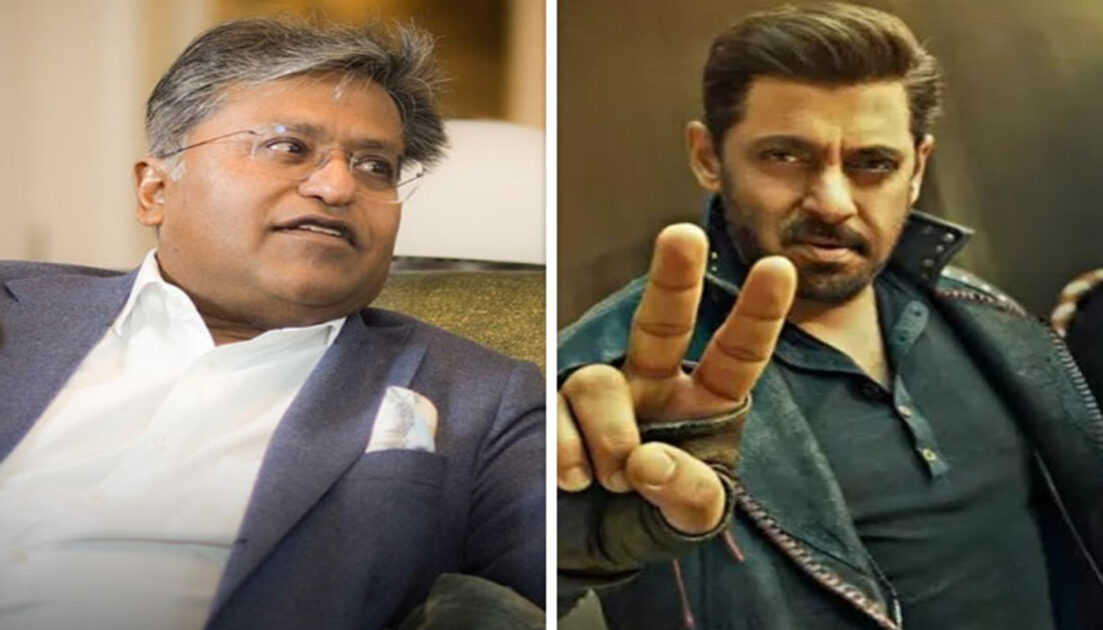
by Lalit Modi has categorically denied reports claiming that he is set to enter the Bigg Boss 20 house, calling the reports “fake news” and revealing that his lawyers have issued a legal notice over the claims. The clarification comes as speculation surrounding the upcoming Salman Khan-hosted season continues to intensify.
The countdown to Bigg Boss 20 has already begun, and as is customary with every new season of the reality television phenomenon, speculation about the potential contestant lineup is dominating entertainment conversations. Among the many names that recently began circulating online was that of businessman and former IPL chairman Lalit Modi.
The reports suggested that Modi could be among the personalities entering the Bigg Boss house for its landmark twentieth season. However, the businessman has now directly rejected those claims. In a strong response shared publicly, Modi described the reports as “fake news” and made it clear that he has neither been approached to participate in the show nor intends to become a contestant.
The development has added another twist to the already busy pre-season speculation around Bigg Boss 20. More importantly, Modi’s decision to respond publicly—and to say that his lawyers have issued a legal notice—has shifted the story from ordinary casting speculation to a wider conversation about verification, celebrity rumours and the speed at which unconfirmed entertainment reports can spread online.
Lalit Modi puts the Bigg Boss 20 speculation to rest
The speculation surrounding Modi’s alleged participation surfaced across social media and entertainment platforms, with reports claiming that the businessman had been approached for the upcoming season.
The reports gained attention partly because Modi would represent an unconventional choice for Bigg Boss. Unlike the actors, television personalities, influencers and entertainers who traditionally make up the show’s contestant pool, his public profile has largely been associated with business, cricket administration and the creation of the Indian Premier League.
That unusual possibility was enough to generate curiosity among fans and social media users.
Modi, however, has now rejected the entire premise.
According to his public response, he stated that he had not been approached for Bigg Boss 20, was not participating in the show and had no intention of doing so. He also criticised the manner in which the claim had reportedly become a news story without him being contacted for confirmation.
His response was notably direct rather than ambiguous. Instead of leaving room for further speculation, Modi sought to establish that there was no deal, participation agreement or reported approach from the showmakers from his perspective.
For viewers accustomed to weeks of rumours before a Bigg Boss season begins, the distinction is important. A name appearing in a speculative report does not necessarily mean that the person has signed a contract or even been approached. Modi’s statement makes his own position clear: he says he is not entering the house.
Why the rumour attracted so much attention
On the surface, Lalit Modi and Bigg Boss may appear to belong to entirely different worlds. One is associated primarily with sports and business; the other is one of India’s most recognisable reality television formats.
But that contrast may be precisely what made the rumour so compelling.
Bigg Boss has developed a long-standing reputation for bringing together personalities from very different areas of public life. Actors, singers, comedians, influencers, television stars, social media personalities and public figures have all contributed to the show’s unpredictable mix.
A businessman with Modi’s level of public recognition would therefore have represented a dramatic departure from a conventional celebrity casting choice.
His public history is also familiar to a large Indian audience because of his central role in the creation and early development of the IPL. As the tournament transformed the cricket-business landscape, Modi became one of the most recognisable figures associated with the league’s early years.
That background gives his name immediate news value even outside cricket coverage.
Consequently, the idea of seeing him inside the Bigg Boss house was enough to trigger substantial online interest—even before any official confirmation existed.
What Lalit Modi’s legal notice means for the reports
The most significant part of Modi’s response is not simply his denial. It is his statement that his lawyers have issued a legal notice concerning the reports.
This signals that he considers the publication and circulation of the claim serious enough to warrant formal legal action.
It is important, however, to distinguish between a legal notice and a court judgment. A legal notice is generally a formal communication asserting a person’s position, raising objections to certain conduct and potentially demanding corrective action or other remedies. The existence of a legal notice does not, by itself, establish that a court has ruled in favour of either party.
In this case, the notice forms part of Modi’s response to what he describes as fabricated reporting. His position is that the claim was published without first verifying it with him.
That aspect of the story highlights an increasingly important issue in entertainment journalism: the difference between reporting that someone has been approached and reporting that someone is definitely joining a show.
The two are not interchangeable.
A production team may allegedly contact a personality without reaching an agreement. A conversation may take place without a contract being signed. A name can also emerge through industry speculation even when the person has never been contacted.
Once such a claim reaches social media, however, those distinctions can disappear quickly.
A headline suggesting that a celebrity “will enter” a reality show can easily be repeated by dozens of accounts, eventually making an unverified claim appear established simply because it has been repeated many times.
Bigg Boss 20 is already generating major casting speculation
Modi’s denial arrives at a time when Bigg Boss 20 is already surrounded by considerable curiosity about its contestant lineup.
The twentieth season has been announced, with Salman Khan returning as host of the Hindi edition. The franchise is also expanding across multiple Indian languages, adding to the scale and visibility of the upcoming season.
The size of the franchise has naturally created an enormous appetite for information about the participants.
Several names have surfaced in reports and online discussions, but the distinction between a person being “rumoured,” “approached” or “confirmed” remains essential.
Entertainment reports frequently use phrases such as “likely to enter,” “in talks,” “approached for the show” or “expected to participate.” For audiences, these expressions can sometimes blend together and become interpreted as confirmation.
However, they represent very different stages of the casting process.
That is precisely the environment in which a name such as Lalit Modi’s can suddenly become part of the conversation.
Salman Khan’s return adds to the season’s anticipation
The controversy comes against the backdrop of a particularly ambitious Bigg Boss season.
Salman Khan’s return as host has been one of the major talking points surrounding the upcoming edition. The wider franchise is also expanding across languages, giving the Bigg Boss brand an even broader national presence.
The expansion demonstrates the continued commercial and cultural influence of the reality-show format.
It also means that the show’s contestant rumours have an even larger potential audience.
Every new name can become a social-media talking point, while unusual casting possibilities are particularly likely to attract attention.
The Lalit Modi speculation fit that pattern perfectly because his professional identity is so different from the traditional Bigg Boss contestant profile.
The extraordinary reach of Bigg Boss makes rumours especially powerful
There is a reason Bigg Boss casting rumours can generate such intense attention before a season begins.
The franchise has become far more than a television programme. It is now a major digital and social-media event in which contestants’ names, interviews, fan theories, controversies and promotional material circulate across multiple platforms.
That enormous reach helps explain why contestant speculation has become an entertainment category of its own.
Even an unconfirmed name can attract thousands of reactions, reposts and discussions.
For celebrities and public figures, however, that attention can have consequences.
An inaccurate report can affect public perception, professional plans and personal reputation. When a claim is repeated across multiple social-media accounts, correcting it can become much harder than publishing it in the first place.
From rumour to “news”: the verification problem
Lalit Modi’s criticism raises a broader question about how entertainment news is consumed in the social-media era.
Traditionally, a report might originate with a publication, be checked by an editor and then reach an audience. Today, information can move in the opposite direction.
A social-media post can make a claim, another account can repost it, an entertainment page can turn it into a headline, and users can then share the headline as though it were independently confirmed.
By the time the original source is examined, the claim may already have reached a huge audience.
This creates a peculiar problem: repetition can create the appearance of confirmation.
The Bigg Boss ecosystem is particularly vulnerable to this because secrecy around contestants is part of the show’s promotional appeal. The production team has an incentive to keep official details under wraps, while fans are eager to discover them early.
That creates a perfect environment for speculation.
Names can circulate long before the official announcement, and sometimes those names eventually turn out to be correct. At other times, the individuals involved deny the reports completely.
The Lalit Modi episode falls firmly into the latter category based on his own public statement.
Why direct clarification from the person involved matters
Celebrity denials are not automatically the final word on every entertainment rumour. Circumstances can change, negotiations can remain confidential and public figures may choose not to discuss private conversations.
But in this case, Modi has gone beyond simply saying that he is “not sure” about participating.
His reported statement specifically rejects the claim that he was approached and says he is not participating and has no intention of doing so.
That makes his position unusually clear.
For audiences, it reinforces an important media-literacy lesson: when a report concerns someone’s alleged participation in a major project, the strongest confirmation generally comes from the person, their representative, the production house or the official broadcaster—not simply from social-media speculation.
The legal angle adds another layer to the controversy
The decision to involve lawyers also distinguishes this episode from an ordinary “celebrity denies rumours” story.
Public figures routinely correct inaccurate reports through social media. A legal notice, however, indicates a more formal objection.
Modi’s reported response suggests that his concern is not only that the information is wrong, but also that it was allegedly published without giving him an opportunity to verify or respond to the claim.
That raises questions about editorial responsibility.
Entertainment reporting often operates under intense pressure to be first. A rumour about a major reality show can produce enormous attention, particularly when the name attached to it is unexpected.
But speed and verification are not the same thing.
The more surprising a claim is, the more important verification becomes.
A story saying that a familiar television personality has been approached for Bigg Boss may fit an established pattern. A claim involving a prominent businessman whose career has largely existed outside reality television warrants a particularly careful approach.
What viewers should take away from the controversy
For Bigg Boss fans, the simplest takeaway is that Lalit Modi should not currently be treated as a confirmed contestant for Bigg Boss 20.
In fact, based on his own statement, the opposite is true: he says he has not been approached, will not participate and does not intend to enter the show. He has also indicated that his legal team has issued a notice concerning the reports.
That means social-media posts continuing to present his alleged participation as confirmed would contradict the public clarification he has already provided.
It also demonstrates why audiences should be cautious with “confirmed contestant” lists circulated before official announcements.
The distinction between rumour, reported approach, negotiation and confirmed participation may seem small, but it can completely change the meaning of a story.
Bigg Boss 20 still has plenty of mystery left
Lalit Modi may have removed his name from the speculation, but the larger guessing game surrounding Bigg Boss 20 is unlikely to slow down.
The twentieth season is already being positioned as a major milestone for the franchise. Salman Khan’s return has generated anticipation, while the expansion of the wider franchise promises an even larger audience.
The contestant lineup, meanwhile, remains the biggest unanswered question.
As more names emerge, audiences will likely continue to encounter a mixture of genuine casting information, industry speculation and social-media rumours.
That is part of the pre-season Bigg Boss experience—but it also makes responsible reporting more important.
For now, one name can be removed from the rumour mill with considerable certainty.
Lalit Modi is denying reports that he will enter the Bigg Boss 20 house.
Lalit Modi’s denial is a reminder that not every viral claim is a confirmed story
The episode ultimately illustrates something larger than one reality-show rumour.
In today’s entertainment ecosystem, a claim can become viral within minutes. The speed of circulation can make audiences feel that a story must be true simply because everyone seems to be discussing it.
But virality is not verification.
Modi’s response demonstrates why public clarification still matters. Rather than allowing the speculation to continue unchecked, he publicly stated his position and said his lawyers had taken action over the reports.
For Bigg Boss 20, the controversy may become just another chapter in the show’s famously dramatic pre-season build-up. For the wider media conversation, however, it serves as a useful reminder that the difference between “reported,” “rumoured” and “confirmed” should never be overlooked.
Until the makers officially reveal the contestant lineup, fans will undoubtedly continue to speculate about who will walk through the iconic Bigg Boss door.
But Lalit Modi has made his own answer clear: he says that person will not be him.