 by
by Fashion controversies often reveal more than just opinions about clothing. They become cultural markers, exposing society’s values, anxieties, and evolving attitudes. Few celebrity moments illustrate this better than Mallika Sherawat’s recent reflection on her early Cannes Film Festival appearance—an event that, according to the actress, generated headlines and controversy for a fashion choice that today may hardly raise eyebrows.
Nearly two decades after making headlines at Cannes, Mallika revisited the memory with a striking observation: what was once considered shocking has now become ordinary. Her comments have revived discussions about changing social standards, women’s autonomy in fashion, media sensationalism, and how celebrity culture has transformed over time.
As conversations continue online, Mallika’s statement serves as more than a nostalgic recollection. It offers a lens into how public attitudes toward glamour, female expression, and international red-carpet culture have evolved dramatically over the years.
A Cannes Memory That Refused to Fade
Recalling her first visit to the Cannes Film Festival nearly twenty years ago, Mallika reflected on attending the prestigious event alongside international action icon Jackie Chan. For an actress coming from a small-town background and entering one of the world’s most recognized entertainment stages, the experience carried immense emotional significance.
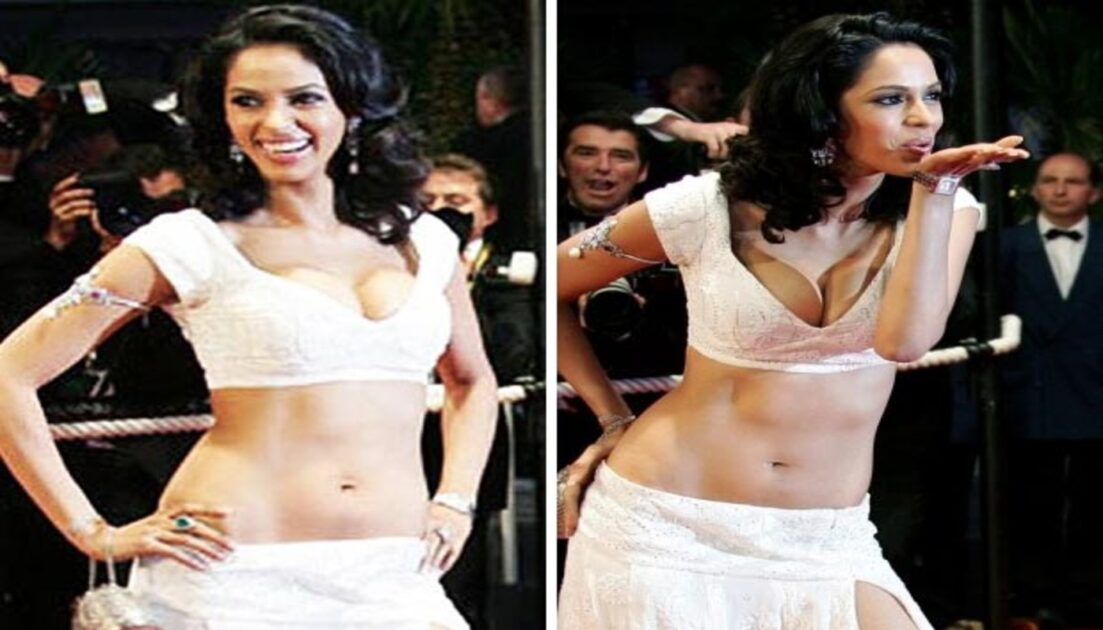
She described the moment with honesty and humor, recalling how her outfit—a ghagra paired with what she referred to as a “dangerously low-cut blouse”—unexpectedly ignited a media storm.
At the time, the reaction was immediate and intense. Newspapers, television channels, entertainment programs, and celebrity magazines focused heavily on her appearance. Discussions moved beyond fashion critique and transformed into debates over morality, representation, and celebrity behavior.
For Mallika, the experience was surreal. Not only had she entered a globally celebrated cultural space, but she had also become the center of a national conversation.
Perhaps the most striking part of her recollection was her final observation: “And now… it’s normal.”
That sentence has become the central point of renewed discussions online because it raises a larger question: Have societal standards truly changed, or have people simply become accustomed to greater fashion experimentation?
When Fashion Became Front-Page News
To understand why Mallika’s Cannes appearance created such a strong reaction, it is necessary to revisit the media landscape of the early 2000s.
Today’s entertainment environment is driven by social media platforms where audiences are exposed to countless celebrity appearances daily. Bold fashion moments appear every few hours, often competing for attention in a fast-moving digital cycle.
But two decades ago, celebrity visibility worked differently.
Television entertainment segments, newspapers, magazine covers, and limited online portals largely controlled narratives surrounding public figures. As a result, a single fashion moment could dominate public conversation for weeks.
Mallika emerged during an era where Bollywood itself was navigating changing identities. Indian cinema was opening further toward international audiences, global collaborations were increasing, and celebrity culture was beginning to expand beyond national borders.
Yet social expectations surrounding actresses remained deeply conservative in many ways.
Women in entertainment frequently encountered conflicting expectations: they were expected to appear glamorous while simultaneously remaining within socially accepted boundaries.
Crossing those invisible boundaries often resulted in criticism.
Mallika’s outfit became one of those moments where public fascination and moral judgment collided.
Instead of discussions centering on her achievement of attending a globally recognized festival, much of the attention shifted toward her appearance.
This pattern was not unique to Mallika. Fashion controversies involving actresses often became larger debates around culture itself.
The Early Cannes Era for Indian Celebrities
Today, Indian representation at Cannes has become increasingly common. Actors, influencers, beauty ambassadors, filmmakers, and entrepreneurs regularly walk the red carpet.
But the environment looked very different years ago.
At that time, Indian celebrity participation at Cannes was still developing. Red-carpet appearances by Bollywood personalities generated significant attention precisely because they were relatively rare.
There was curiosity surrounding how Indian celebrities would present themselves on international platforms.
Would they embrace traditional aesthetics?
Would they adopt global fashion trends?
Would they represent Indian culture in a specific way?
These expectations created immense scrutiny.
For early attendees, every appearance carried symbolic importance beyond personal style choices.
Mallika entered Cannes during a period where representation itself was under examination.
As one of the actresses attracting international media attention, her appearance naturally drew curiosity. However, curiosity quickly transformed into sensational coverage.
Looking back now, her experience reflects broader challenges faced by pioneers entering spaces where norms had not yet fully evolved.
Media Sensationalism and Celebrity Narratives
Mallika’s recollection also reveals how media narratives can shape public perception.
Celebrity culture frequently magnifies specific moments while reducing larger achievements into simplified headlines.
An appearance at a prestigious international event should ideally focus on professional milestones, collaborations, and artistic participation.
Yet entertainment industries often prioritize visually dramatic narratives.
A striking outfit becomes easier to market than nuanced conversations.
Headlines emphasizing controversy generate stronger reactions than stories celebrating personal growth.
Mallika’s Cannes appearance illustrates how quickly media attention can shift focus.
Instead of becoming solely a story about an Indian actress attending one of cinema’s most prestigious festivals, it became remembered largely as a fashion controversy.
Years later, however, the memory has transformed.
Today audiences revisit it with greater context and curiosity.
What once generated criticism now appears, to many observers, relatively mild by contemporary standards.
That change itself reveals shifting cultural attitudes.
Changing Standards of Glamour
One reason Mallika’s comments resonate strongly today is because they expose how rapidly definitions of “boldness” change.
Fashion standards are not fixed.
They evolve alongside cultural shifts, media exposure, and generational attitudes.
Styles once considered controversial eventually become accepted.
Trends initially criticized often become mainstream.
Red-carpet fashion in particular reflects these transformations.
Over the past two decades, celebrity dressing has become increasingly experimental.
Designers push artistic boundaries.
Celebrities embrace individuality.
Audiences have become more accustomed to unconventional silhouettes and dramatic styling choices.
As exposure increases, shock value naturally declines.
What generated debate years ago may now seem routine.
Mallika’s observation captures this evolution perfectly.
Her statement does not simply comment on clothing.
It highlights the changing nature of societal comfort.
People often perceive fashion through the lens of the period they inhabit.
As eras change, reactions change too.
The Double Standards Women Continue to Face
Despite evolving attitudes, Mallika’s reflection also reignites conversations about persistent double standards affecting women in public life.
Female celebrities often experience disproportionate scrutiny regarding appearance.
Their clothing choices frequently become subjects of national debate.
Questions surrounding modesty, appropriateness, and respectability continue appearing repeatedly across entertainment discussions.
Male celebrities, meanwhile, generally avoid similar levels of examination.
This imbalance remains visible globally.
Women are often expected to balance confidence with caution.
Too conservative, and they may be criticized as unexciting.
Too bold, and they may face accusations of excess.
Such contradictions create impossible standards.
Mallika’s Cannes story illustrates how these dynamics operated years ago and, in some cases, continue today.
The difference lies primarily in growing awareness.
Audiences increasingly recognize these patterns and challenge unfair expectations.
Public conversations have gradually shifted toward supporting personal choice and individual expression.
Progress remains ongoing, but discussions have become more nuanced.
Social Media Has Changed Everything
If Mallika’s original Cannes appearance happened today, reactions would likely unfold very differently.
Modern celebrity culture exists within an entirely transformed digital ecosystem.
Social media platforms have decentralized influence.
Actors now communicate directly with audiences without relying solely on traditional media channels.
Narratives emerge faster and evolve continuously.
Supporters can immediately challenge criticism.
Fans create conversations independent of entertainment journalism.
At the same time, digital culture introduces new complexities.
Online debates move rapidly.
Praise and backlash can coexist simultaneously.
Public opinion fragments across platforms.
Yet one major difference remains clear:
Celebrities today possess greater control over their stories.
Mallika herself revisiting the incident years later demonstrates this shift.
Instead of media defining the memory entirely, she reclaims and reframes it through her own perspective.
That act itself carries significance.
The Symbolism Behind “For a Girl From a Small Town…”
Among all elements of her reflection, perhaps the most emotionally resonant line was her reference to being “a girl from a small town.”
That statement introduces themes extending beyond celebrity culture.
It speaks to aspiration.
Transformation.
Possibility.
For many individuals coming from smaller cities and modest backgrounds, entering elite global spaces can feel overwhelming.
Imposter syndrome, cultural differences, and visibility pressures often accompany such experiences.
Mallika’s journey represented more than attending a film festival.
It represented entering an arena previously perceived as distant.
Her reflection acknowledges the emotional weight of that moment.
Beneath headlines and fashion discussions existed a personal story of achievement.
For someone stepping onto an international stage for the first time, the experience carried meaning beyond cameras and criticism.
Revisiting the Past Through Today’s Lens
What makes Mallika’s comments particularly interesting is not the controversy itself but the perspective gained through time.
Moments that once felt defining often appear different years later.
Distance allows reinterpretation.
Experiences acquire context.
Societies evolve.
People evolve too.
Looking back, Mallika does not appear angry or defensive.
Instead, her reflection carries a tone of observation.
She seems amused by how dramatically perceptions have shifted.
And perhaps that is why her statement resonates.
Because many people recognize similar patterns within broader culture.
Ideas once considered radical eventually become accepted.
Resistance often precedes normalization.
Change rarely feels immediate while it unfolds.
But looking backward makes transformation easier to recognize.
A Fashion Moment That Became Cultural Commentary
Mallika Sherawat’s Cannes recollection ultimately transcends celebrity nostalgia.
It becomes a reflection on changing times.
Her outfit may have sparked headlines years ago, but today the larger conversation concerns society itself.
The story raises enduring questions:
Who decides what is “too much”?
Why do standards shift?
Why are women often judged differently?
How does media influence perception?
And what does normalization actually reveal about cultural progress?
Fashion controversies rarely remain just about clothing.
They become mirrors reflecting broader societal tensions.
Mallika’s memory of a “dangerously low-cut blouse” now stands as more than a style anecdote.
It represents an era, a mindset, and a reminder that culture constantly evolves.
And perhaps her final observation says it best:
What once shocked the world may eventually become ordinary.