 by
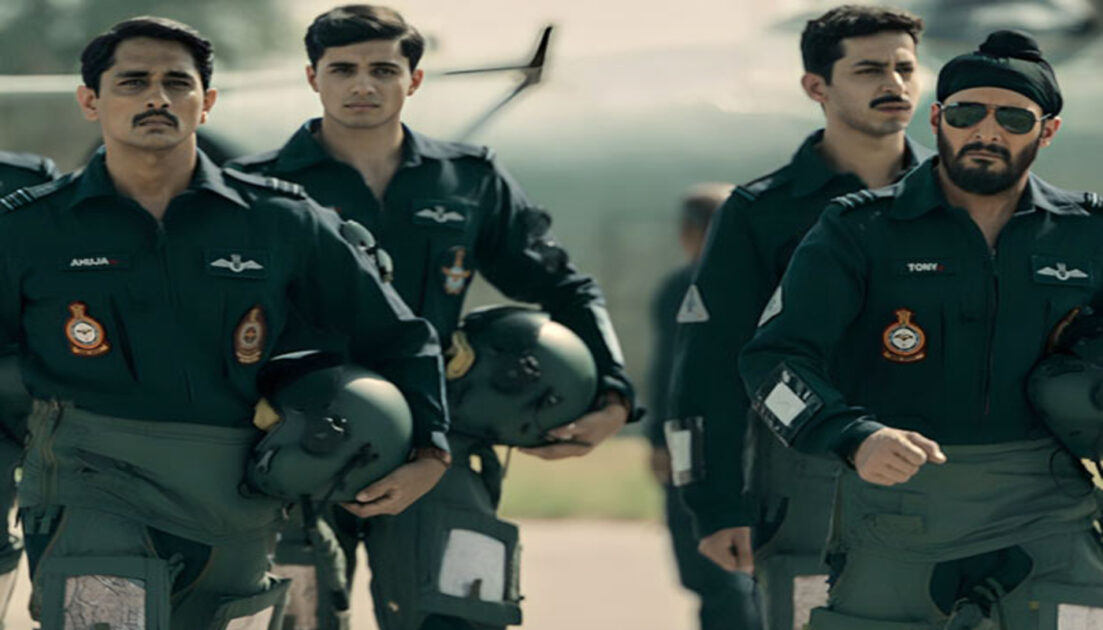
by The announcement of Netflix’s Operation Safed Sagar, scheduled to premiere on August 7, marks another significant milestone in the evolution of Indian streaming content. As audiences increasingly gravitate toward stories rooted in real events, the series promises to revisit one of the most defining military episodes in modern Indian history—the 1999 Kargil War—through a lens that extends beyond combat.
Unlike conventional war dramas that often prioritize large-scale battle sequences and strategic victories, Operation Safed Sagar focuses on the Golden Arrows Squadron, illuminating the personal sacrifices, resilience, and determination of the men and women involved in one of India’s most challenging military operations. By placing human experiences at the center of the narrative, the series aims to deliver an emotionally resonant account of courage under extraordinary circumstances.
For viewers unfamiliar with the historical backdrop, Operation Safed Sagar was the codename for the Indian Air Force’s role during the Kargil conflict. The operation represented a turning point in modern aerial warfare for India, showcasing precision, strategic planning, and remarkable bravery in one of the world’s most demanding mountain battlefields.
As streaming platforms continue investing in premium historical dramas, Operation Safed Sagar reflects a growing appetite for stories that combine factual history with compelling cinematic storytelling. More importantly, it provides an opportunity for younger generations to revisit a chapter that shaped India’s military doctrine while appreciating the human spirit that defined it.
Revisiting the Historical Context of the Kargil War
To appreciate the significance of Operation Safed Sagar, it is essential to understand the historical events surrounding the Kargil War.
The conflict erupted in the summer of 1999, when infiltrators and Pakistani military personnel occupied strategic heights on the Indian side of the Line of Control (LoC) in the Kargil sector of Jammu and Kashmir. These positions overlooked vital supply routes, particularly National Highway 1A, threatening India’s logistical access to Ladakh.
The mountainous terrain presented unprecedented operational challenges. Peaks rising above 16,000 to 18,000 feet created severe limitations for both infantry and air operations. Thin air affected aircraft performance, while the rugged landscape complicated surveillance and targeting.
India responded with Operation Vijay, the military campaign to reclaim occupied territories. Supporting this effort was Operation Safed Sagar, the Indian Air Force’s dedicated mission that brought aerial capabilities into an exceptionally demanding combat environment.
Unlike many previous conflicts, the Indian Air Force had to conduct operations under strict political directives, avoiding crossing the Line of Control while still delivering effective support to ground forces. This imposed significant tactical constraints that required precision, innovation, and discipline.
The Kargil War ultimately concluded with India regaining control over the occupied positions. Beyond military success, the conflict became a defining moment in Indian strategic thinking, highlighting the importance of joint operations between the Army and Air Force and leading to significant reforms in defense planning.
Understanding Operation Safed Sagar
The title of Netflix’s series references an actual military operation rather than a fictional construct.
Operation Safed Sagar represented the Indian Air Force’s combat involvement during the Kargil conflict. It marked the first substantial use of air power by India in such a high-altitude war environment.
Operating fighter aircraft, reconnaissance missions, and precision strike capabilities in mountainous terrain demanded exceptional levels of skill. Pilots had to contend with unpredictable winds, limited maneuvering space, enemy air defenses, and the challenges of identifying targets nestled among rocky peaks.
Aircraft including Mirage 2000 fighters became instrumental in conducting precision-guided strikes that significantly assisted ground troops. These missions demonstrated how technology, training, and coordination could overcome geographical disadvantages.
However, military hardware alone could not determine success.
Behind every aircraft were engineers ensuring operational readiness, logistics teams managing supplies, intelligence officers analyzing reconnaissance data, and support personnel working tirelessly under immense pressure.
The operation therefore represented not only aerial combat but also the coordinated effort of hundreds of professionals whose contributions rarely receive public recognition.
This broader perspective appears to be central to Netflix’s adaptation.
The Golden Arrows Squadron: The Human Focus of the Story
One of the most intriguing aspects of Operation Safed Sagar is its emphasis on the Golden Arrows Squadron.
Rather than depicting war as an abstract clash between nations, the series reportedly explores the people behind the mission. This narrative choice reflects an important shift in contemporary war storytelling.
Military history often remembers operations through maps, dates, and strategic outcomes. Individual experiences can become overshadowed by larger historical narratives.
By centering the Golden Arrows Squadron, the series highlights the daily realities faced by service personnel:
- The psychological burden of dangerous missions.
- The uncertainty before every sortie.
- The trust developed between squadron members.
- The emotional cost borne by families waiting back home.
- The resilience required to continue despite losses.
Such stories humanize military service, reminding audiences that behind every successful operation are individuals making deeply personal sacrifices.
The emphasis on camaraderie is particularly significant. Military units often describe themselves as families forged through shared adversity. Bonds developed in combat environments become critical to operational effectiveness and emotional survival.
Exploring these relationships allows viewers to connect with historical events on a deeply personal level.
Beyond Action: The Evolution of War Dramas
War dramas have evolved considerably over the past few decades.
Earlier productions frequently celebrated battlefield heroics through clear distinctions between heroes and villains. Modern audiences, however, increasingly seek emotional authenticity and nuanced storytelling.
Operation Safed Sagar appears positioned within this newer tradition.
Instead of relying solely on explosions and combat sequences, it reportedly examines:
- Leadership under pressure.
- Ethical dilemmas.
- Fear and uncertainty.
- Teamwork.
- Personal resilience.
- The emotional consequences of conflict.
This evolution reflects changing audience expectations.
Streaming platforms have enabled creators to produce longer-form narratives that devote substantial time to character development. Multi-episode formats allow historical events to unfold gradually, giving viewers insight into both operational decisions and personal journeys.
As a result, military dramas today often resemble psychological dramas as much as action spectacles.
High-Altitude Warfare: A Battlefield Unlike Any Other
The Kargil conflict differed dramatically from conventional warfare.
Combat occurred in one of the harshest environments on Earth.
Temperatures frequently dropped below freezing, oxygen levels were significantly reduced, and steep rocky terrain complicated every movement.
Even routine tasks became physically exhausting.
For pilots, these conditions introduced additional complexities.
Aircraft performance changes at extreme altitudes.
Target acquisition becomes more difficult.
Weather conditions can shift rapidly.
Mountainous terrain limits maneuverability while increasing navigational risks.
Every mission therefore required meticulous planning.
Ground troops faced equally daunting obstacles.
Climbing vertical mountain faces while carrying heavy equipment, often under enemy fire, demanded extraordinary endurance.
These environmental realities transformed geography into an active participant in the conflict.
A well-produced dramatization has the opportunity to convey not only military strategy but also the relentless physical hardships endured by personnel operating in such conditions.
The Human Cost Behind Military Success
Victory narratives often celebrate strategic achievements while overlooking the emotional toll of war.
One of the strengths of contemporary military storytelling lies in acknowledging that every operational success comes with profound personal sacrifices.
Personnel deployed during wartime experience extended separation from families, uncertainty regarding survival, and the constant psychological stress associated with combat.
Parents wait anxiously.
Spouses endure prolonged silence.
Children grow accustomed to absence.
Even after returning home, many veterans carry lasting emotional memories of conflict.
Stories exploring these dimensions encourage audiences to recognize military service as a deeply human experience rather than merely a patriotic symbol.
By reportedly emphasizing the people behind Operation Safed Sagar, the Netflix series contributes to this broader understanding.
Why Historical Dramas Continue to Captivate Streaming Audiences
Historical dramas have become increasingly popular across global streaming platforms.
Several factors explain this trend.
First, audiences seek stories grounded in reality.
True events often possess emotional weight that fictional narratives struggle to replicate.
Second, viewers increasingly appreciate educational entertainment.
Series inspired by historical events encourage audiences to explore real history after finishing an episode.
Third, premium streaming budgets enable filmmakers to recreate historical settings with impressive authenticity.
Costumes, military equipment, aircraft, production design, and visual effects combine to immerse viewers in another era.
Finally, long-form storytelling provides sufficient space to balance historical context with personal narratives.
Rather than compressing decades into two hours, streaming series can explore events with greater depth and nuance.
Operation Safed Sagar benefits from all these advantages.
The Importance of Authentic Representation
Producing military dramas based on real events carries significant responsibility.
Creative teams must balance dramatic storytelling with historical integrity.
Audiences today are more informed than ever.
Military historians, veterans, and journalists frequently analyze historical productions, identifying both strengths and inaccuracies.
Authenticity therefore extends beyond visual realism.
It includes:
- Accurate operational procedures.
- Faithful representation of military culture.
- Respectful portrayal of personnel.
- Historically grounded dialogue.
- Realistic command structures.
- Appropriate depiction of equipment and tactics.
When creators achieve this balance, historical dramas become both entertaining and educational.
Respectful storytelling ensures that those who served are represented with dignity while allowing broader audiences to understand the complexity of military operations.
Technology and Modern War Storytelling
Advancements in filmmaking technology have transformed how military history is presented on screen.
High-resolution cinematography, sophisticated CGI, drone photography, and advanced sound design now allow filmmakers to recreate complex aerial operations with remarkable realism.
This is particularly important for a story centered on air power.
Flight sequences that once required expensive practical effects can now blend real aircraft footage with digital enhancements, creating immersive experiences without sacrificing authenticity.
Sound design also plays a crucial role.
The roar of fighter engines, radio communications, mountain echoes, and battlefield silence all contribute to emotional immersion.
Rather than simply showcasing action, modern technology enables viewers to experience the tension associated with each mission.
Remembering Unsung Heroes
One of the most valuable contributions of productions like Operation Safed Sagar is their ability to recognize individuals who rarely appear in history textbooks.
Military success depends on far more than frontline personnel.
Engineers maintain aircraft.
Medical teams provide emergency care.
Logistics specialists sustain operations.
Communication officers coordinate missions.
Intelligence analysts interpret reconnaissance.
Administrative personnel manage complex operational systems.
Collectively, these professionals enable combat missions to succeed.
By broadening the narrative beyond traditional battlefield heroics, the series acknowledges the collaborative nature of military achievement.
Such recognition enriches public understanding of national defense.
The Emotional Power of Memory
Historical dramas often serve as acts of remembrance.
For families connected to military service, these productions can evoke pride, reflection, and emotional connection.
For younger viewers, they become introductions to historical events that might otherwise remain distant or unfamiliar.
The Kargil War occupies a unique place in India’s contemporary memory because it occurred during the television era.
Millions followed daily developments through news broadcasts, witnessing returning soldiers, national tributes, and evolving military operations in near real time.
A streaming adaptation offers an opportunity to revisit these memories while presenting them in a format accessible to a new generation accustomed to digital storytelling.
In doing so, history remains alive through narrative rather than simply existing within archives.
Conclusion
Netflix’s Operation Safed Sagar arrives at a moment when audiences increasingly value historical authenticity combined with emotionally driven storytelling. By focusing on the Golden Arrows Squadron and the human experiences surrounding the Indian Air Force’s role during the 1999 Kargil War, the series promises to move beyond conventional battlefield narratives and explore the courage, discipline, and resilience that defined one of India’s most significant military operations.
Its emphasis on people rather than merely military hardware distinguishes it from many traditional war dramas. Through the lives of pilots, support staff, commanders, and families, viewers are likely to witness not only strategic operations but also the emotional realities that accompany national service.
At its core, Operation Safed Sagar is more than a dramatization of military history. It represents an effort to preserve memory, honor sacrifice, and remind contemporary audiences that history is ultimately shaped by ordinary individuals confronting extraordinary circumstances. Whether approached as a historical drama, a tribute to service personnel, or a study of resilience under pressure, the series has the potential to become an important addition to the growing collection of thoughtfully produced military narratives on global streaming platforms.
As streaming services continue investing in stories rooted in real events, productions like Operation Safed Sagar demonstrate that the most compelling war stories are often those that illuminate the humanity behind the headlines—where bravery is measured not only by battlefield victories but also by the quiet determination, teamwork, and unwavering commitment that make such victories possible.