 by
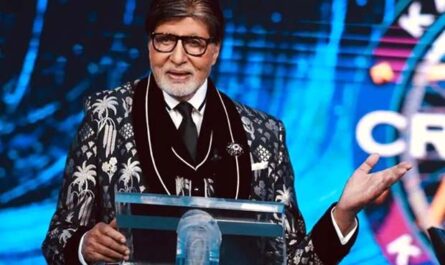
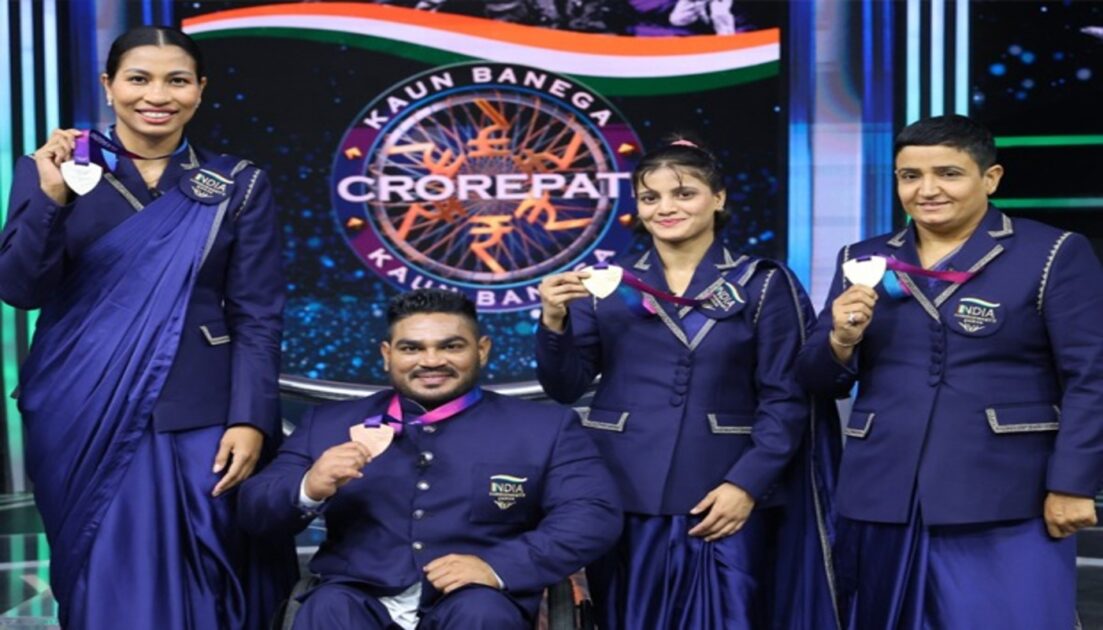
by Kaun Banega Crorepati Season 18 took a special turn on August 17 as Amitabh Bachchan welcomed some of India’s Commonwealth Games 2026 sporting heroes to the iconic hotseat. The episode brought together boxer Lovlina Borgohain, judoka Asmita Dey, para powerlifter Jhandu Kumar and para-athlete Sharmila Dhankar, creating an inspiring celebration of sporting achievement, perseverance and the determination required to represent India on an international stage.
While Kaun Banega Crorepati is fundamentally a quiz show, its appeal has always extended beyond questions and prize money. The programme frequently gives viewers an opportunity to understand the personal journeys behind extraordinary achievements. This special episode continued that tradition by moving the spotlight from the sporting arena to the television studio and allowing four accomplished athletes to speak about their careers, struggles and historic moments.
The episode was particularly meaningful because the guests came from different sporting disciplines and backgrounds. Their achievements demonstrated the growing diversity of India’s sporting success, while their personal stories highlighted a common quality: resilience.
From boxing and judo to para powerlifting and para athletics, the athletes represented different definitions of excellence. Yet, each journey reflected the same fundamental idea — reaching the highest level of sport requires far more than physical ability. It demands discipline, patience, sacrifice, confidence and the willingness to continue even when the journey becomes difficult.
Amitabh Bachchan welcomes India’s sporting stars
Amitabh Bachchan’s association with Kaun Banega Crorepati has made the show’s hotseat one of the most recognisable spaces on Indian television. Over the years, contestants and guests have used the platform to share stories about ambition, struggle and achievement.
The Commonwealth Games special brought that emotional storytelling into the world of sport.
Instead of seeing athletes only during competitions, viewers were given the opportunity to see them in a more relaxed environment. Sporting events usually focus on results: who won, who lost, who broke a record and who stood on the podium. A television conversation can reveal the much larger journey behind those results.
That distinction was important for this episode.
A medal may take only seconds to win, but the preparation behind it can take years. A successful boxing bout does not show the countless training sessions that came before it. A gold-medal throw does not reveal every setback experienced during an athlete’s career. A powerlifting medal does not capture the financial and personal obstacles that may have stood between an athlete and the competition.
By bringing these athletes onto the KBC hotseat, the programme allowed audiences to understand the people behind the medals.
Lovlina Borgohain’s journey to a Commonwealth Games medal
Lovlina Borgohain was one of the most recognisable names among the special guests.
The accomplished boxer already had major international achievements to her name before entering the 2026 Commonwealth Games. Her career had included an Olympic bronze medal and a World Championships title, making her one of India’s leading representatives in women’s boxing.
However, one achievement had remained missing from her résumé: a Commonwealth Games medal.
That changed in 2026.
Borgohain secured a place on the Commonwealth Games podium and ultimately won silver in the women’s 75kg category. The result was significant because it added a Commonwealth Games medal to an already distinguished international career.
Her journey also demonstrates that even established champions experience uncertainty.
After the Paris Olympics, Borgohain had spoken about a difficult phase in which she questioned her future in boxing. Instead of allowing that uncertainty to end her career, she continued competing and working toward another opportunity.
Her Commonwealth Games performance consequently carried significance beyond the colour of the medal.
It represented persistence.
For an athlete who had already experienced Olympic success, returning to competition and pursuing another major goal demonstrated that motivation does not always come from chasing a first achievement. Sometimes, it comes from proving to yourself that you can continue after disappointment.
Her presence on Kaun Banega Crorepati allowed audiences to see that side of her journey.
The boxer who appears confident inside the ring is also someone who has experienced doubts, setbacks and difficult decisions outside it. That human dimension makes sporting success more relatable.
Asmita Dey makes history for Indian judo
Asmita Dey brought a historic achievement to the KBC hotseat.
The young judoka from Tripura became the first Indian to win a Commonwealth Games gold medal in judo. Competing in the women’s 48kg category, she produced a memorable performance to claim the top position.
Her victory represented a breakthrough not only for Dey but also for Indian judo.
Whenever an athlete becomes the first person from their country to accomplish something, the significance extends beyond the individual. The achievement becomes part of sporting history and creates a new reference point for athletes who follow.
Dey’s journey is particularly inspiring because of her humble beginnings.
She comes from Belonia in Tripura and is the daughter of a bicycle mechanic. Her early introduction to judo was supported by her father, who played an important role in encouraging her sporting ambitions.
Her journey also carried an emotional dimension because she lost her father before her historic Commonwealth Games victory.
That combination of personal loss and professional achievement gives her gold medal a deeper meaning. Sporting success cannot erase grief, but achievement can sometimes become a way of carrying forward the dreams and encouragement received from someone who is no longer present.
Dey’s Commonwealth Games triumph also highlights the importance of sporting opportunities for young athletes outside India’s biggest metropolitan centres.
India’s sporting talent does not exist only in major cities. Young athletes from smaller towns and communities can also reach the highest international levels when they receive the right combination of training, support and opportunity.
Dey’s gold medal is therefore both a personal victory and an important moment for Indian judo.
Her appearance on KBC gave viewers an opportunity to discover the person behind that historic achievement.
Jhandu Kumar’s inspiring rise in para powerlifting
Jhandu Kumar brought another remarkable sporting journey to the episode.
The para powerlifter won India’s first medal at the 2026 Commonwealth Games, earning bronze in the heavyweight category. His successful lift of 190kg secured his place on the podium and gave India an early reason to celebrate.
But the significance of his medal becomes even clearer when his journey is considered.
Kumar’s background was not one of effortless access to elite sporting facilities. Before reaching the international stage, he worked various jobs, including selling vegetables and driving an e-rickshaw.
Such experiences provide a different perspective on what it means to pursue professional sport.
Elite competition requires time, training, equipment and access to coaching. For athletes from financially challenging circumstances, simply finding the opportunity to train consistently can become a major obstacle.
Kumar nevertheless continued pursuing his sporting ambitions.
He initially explored athletics before moving toward para powerlifting, eventually developing into a competitive strength athlete. His progress demonstrates an important quality often seen among successful athletes: adaptability.
Not every athlete follows a perfectly predictable path.
Sometimes an athlete has to change disciplines. Sometimes financial circumstances force them to work while training. Sometimes a physical challenge requires them to approach sport differently.
Success comes from finding a way forward.
Kumar’s Commonwealth Games medal therefore represents more than a single successful lift. It represents years of persistence and the ability to continue working toward a goal despite difficult circumstances.
His appearance on Kaun Banega Crorepati allowed that broader story to reach a much larger audience.
Sharmila Dhankar’s extraordinary story of resilience
Among the athletes featured on the special episode, Sharmila Dhankar’s story stands out for its remarkable combination of sporting achievement and personal resilience.
The para-athlete won gold in the women’s F57 shot put event at the 2026 Commonwealth Games. Her winning throw measured 9.81 metres, earning her a historic place in Indian para-sport.
Her victory was significant on several levels.
Dhankar became the first Indian to win a Commonwealth Games gold medal in para athletics. Her achievement also ended a long wait for India in the event, making the victory an important moment in the country’s para-athletics history.
But her sporting journey cannot be separated from the challenges she faced earlier in life.
Dhankar experienced polio during childhood and later faced serious personal difficulties, including domestic abuse. Her life took a painful turn when she and her daughters were forced to leave their home.
Instead of allowing those circumstances to define her future, she gradually built a new chapter through sport.
Her story demonstrates how sport can sometimes provide more than a profession or competitive outlet. It can offer purpose, independence, confidence and a sense of identity.
Her gold-medal performance in Glasgow therefore carried an emotional weight beyond the result.
The throw itself lasted only a few seconds.
The journey behind it lasted years.
Dhankar’s success also contributed to a historic moment for Indian para athletics because fellow Indian athlete Shilpa Shyla won bronze in the same women’s F57 shot put final. Having two Indian athletes on the podium made the achievement even more memorable.
Their performances demonstrated the growing strength and visibility of Indian para-athletics.
Why the athletes’ stories matter
The most powerful aspect of the KBC episode was not simply that successful athletes appeared on television.
It was the opportunity to understand what their medals actually represent.
Sporting achievements are often reduced to statistics.
Gold.
Silver.
Bronze.
Record.
Time.
Distance.
Score.
But statistics cannot fully explain an athlete’s journey.
A medal does not tell us how many mornings an athlete woke up early to train. It does not show the competitions they lost, the injuries they recovered from, the financial difficulties they faced or the moments when they wondered whether continuing was worth it.
The athletes appearing on KBC gave audiences a glimpse into that invisible part of sporting success.
Their stories demonstrate that perseverance is not an abstract concept. It is something athletes practise repeatedly.
They choose to train again after losing.
They return to competition after disappointment.
They continue after criticism.
They adapt when circumstances change.
They keep pursuing goals that may take years to achieve.
The importance of celebrating athletes beyond cricket
Indian sports conversations have traditionally been dominated by cricket, although the country’s international sporting achievements have become increasingly diverse.
The Commonwealth Games provide an important platform for disciplines that may receive less everyday attention.
Boxing, judo, para powerlifting and para athletics each require exceptional levels of preparation, yet athletes in these disciplines may not enjoy the same visibility as players from India’s most commercially prominent sports.
An entertainment programme like Kaun Banega Crorepati can help bridge that visibility gap.
When athletes appear on mainstream television, viewers who may not regularly follow their sports are introduced to their names, achievements and personalities.
A child who watches Asmita Dey speak about judo may become curious about the sport.
A young person with an interest in boxing may see Lovlina Borgohain as a role model.
Someone unfamiliar with para powerlifting may discover Jhandu Kumar’s discipline.
Another viewer may learn about para athletics through Sharmila Dhankar.
That kind of exposure matters because sporting culture grows when people are able to see themselves represented across different disciplines.
Bringing para-athletes into mainstream conversations
The inclusion of Jhandu Kumar and Sharmila Dhankar is especially significant.
Para-athletes have often had to overcome not only sporting challenges but also limited visibility. Their achievements deserve to be discussed as elite sporting performances rather than being viewed only through the lens of disability.
Kumar’s 190kg lift was an athletic achievement.
Dhankar’s 9.81m throw was an athletic achievement.
Their personal journeys make their stories compelling, but their sporting excellence deserves recognition in its own right.
This distinction is important.
Celebrating para-athletes should not mean focusing exclusively on hardship. It should also mean recognising their technique, preparation, competitive ability and accomplishments.
The KBC episode offered a platform where audiences could appreciate both sides of their stories.
What connects these four athletes?
At first glance, Lovlina Borgohain, Asmita Dey, Jhandu Kumar and Sharmila Dhankar have very little in common.
They compete in different sports.
They come from different backgrounds.
Their careers developed under different circumstances.
Their Commonwealth Games results were different.
Yet their journeys share several important qualities.
The first is persistence.
None of their stories can be described as effortless.
The second is adaptability.
Athletes have to respond to changing circumstances, competition, setbacks and pressure.
The third is ambition.
Reaching the international level requires an athlete to believe that a distant goal is worth pursuing.
The fourth is representation.
Each athlete represents not only themselves but also a wider community of aspiring athletes.
And finally, there is resilience.
Their careers demonstrate that setbacks do not necessarily determine the final outcome.
Why KBC was an appropriate platform
The concept of Kaun Banega Crorepati is built around knowledge, confidence and decision-making under pressure.
That makes the programme surprisingly compatible with the mindset of elite athletes.
Both contestants and athletes must prepare extensively before entering a high-pressure environment.
Both have to make decisions while dealing with uncertainty.
Both know that one moment can change the outcome.
And both require confidence without losing composure.
The athletes’ experiences therefore fit naturally into the show’s larger philosophy of aspiration.
The KBC hotseat has always been about more than answering questions. It is also about discovering what motivates people.
For the Commonwealth Games athletes, that motivation came from different places.
For some, it was family.
For others, it was the desire to overcome difficult circumstances.
For others, it was the ambition to make history.
Together, those motivations created a powerful episode.
Amitabh Bachchan’s role in bringing their journeys to viewers
Amitabh Bachchan has hosted Kaun Banega Crorepati through numerous seasons, and his conversational style has become an important part of the show’s identity.
With the Commonwealth Games athletes, his role extended beyond asking questions.
The format allowed him to interact with people whose accomplishments had already made headlines and encourage them to discuss the stories behind those headlines.
That shift is important.
Audiences may already know that an athlete won a medal, but they may not know what that athlete experienced before reaching the podium.
Television conversation can bridge that gap.
It turns a headline into a human story.
India’s sporting future and the importance of role models
The athletes’ appearance also arrives at an important moment for India’s sporting culture.
The country’s athletes are increasingly achieving recognition across a wider range of disciplines. Every historic medal creates another role model for the next generation.
Asmita Dey can inspire young judokas.
Lovlina Borgohain can inspire aspiring boxers.
Jhandu Kumar can encourage young para powerlifters.
Sharmila Dhankar can motivate athletes interested in para athletics.
Role models are important because ambition often begins with visibility.
It is easier for a young person to imagine achieving something when they have seen someone from their country accomplish it.
This is especially important for athletes from smaller towns, disadvantaged backgrounds or communities that have historically received less sporting visibility.
The bigger lesson behind the medals
The August 17 episode ultimately offered a message that goes beyond the Commonwealth Games.
Success rarely happens in a straight line.
There are victories and defeats.
There are moments of confidence and moments of doubt.
There are opportunities and obstacles.
There are times when the destination seems distant.
What separates many successful athletes is not the absence of difficulty but their response to it.
Lovlina Borgohain’s Commonwealth Games medal came after years of international competition and periods of uncertainty.
Asmita Dey’s historic gold carried the memory of her father’s influence and her journey from Tripura to the international stage.
Jhandu Kumar’s bronze came after a journey that included financial hardship, different occupations and a transition into para powerlifting.
Sharmila Dhankar’s gold followed profound personal difficulties and demonstrated the transformative power of determination.
These stories give their medals emotional meaning.
A celebration that extends beyond the KBC studio
The significance of the special episode is unlikely to end when the programme finishes airing.
For many viewers, it may be the first introduction to one or more of these athletes.
That introduction matters.
Sport needs audiences, but it also needs stories.
When viewers understand the people behind the competitions, they are more likely to develop an interest in the disciplines themselves.
The athletes’ appearance also reminds viewers that India’s sporting success is not limited to one type of athlete or one type of sport.
It includes boxers, judokas, powerlifters, throwers and countless others competing across national and international arenas.
Their journeys deserve recognition because they represent the broader evolution of Indian sport.
A memorable KBC celebration of sporting excellence
The August 17 episode of Kaun Banega Crorepati 18 successfully brought together entertainment and sport in a way that felt both celebratory and meaningful.
Lovlina Borgohain represented persistence after setbacks and added a Commonwealth Games medal to an already impressive international career.
Asmita Dey represented history-making success and became a landmark figure for Indian judo.
Jhandu Kumar represented determination in the face of economic and physical challenges, securing India’s first medal at the 2026 Commonwealth Games.
Sharmila Dhankar represented resilience and historic achievement, becoming a Commonwealth Games para-athletics champion.
Their stories may have begun in different places, but they converged on the KBC hotseat with a common message: achievement is built long before the moment of victory.
A medal is visible.
The years behind it are not.
That is why episodes such as this one matter. They allow audiences to look beyond the podium and recognise the people, sacrifices and dreams that make sporting success possible.
By welcoming these Commonwealth Games winners and medallists, Amitabh Bachchan and Kaun Banega Crorepati 18 turned the hotseat into a celebration of India’s sporting spirit.
And perhaps the most inspiring takeaway was not simply that these athletes won medals.
It was that each of them continued moving forward when the easier choice might have been to stop.
Their stories remind viewers that winning is not always about being the strongest, fastest or most naturally gifted person in the room.
Sometimes, winning begins with simply deciding to keep going.